

When we first shared the story of Mori San in 2024, it was the clarity of his teas and the precision behind them that stayed with us most. Tucked away in the mountains of Honyama, Shizuoka, his Sencha immediately stood apart for their freshness and distinctive mineral character shaped by the cool river mist that moves slowly through the valley each spring.
Returning again this year, very little seemed to have changed.
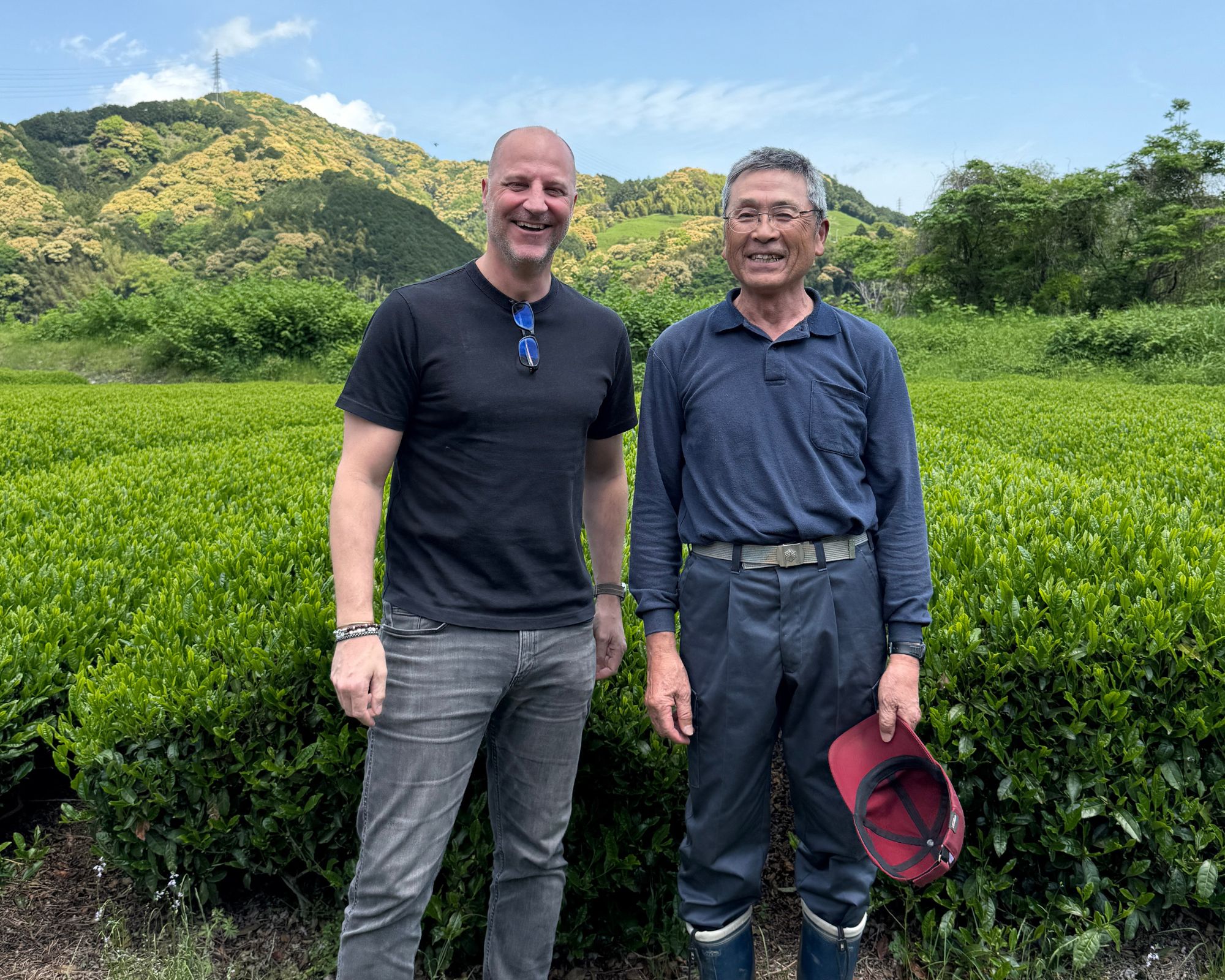
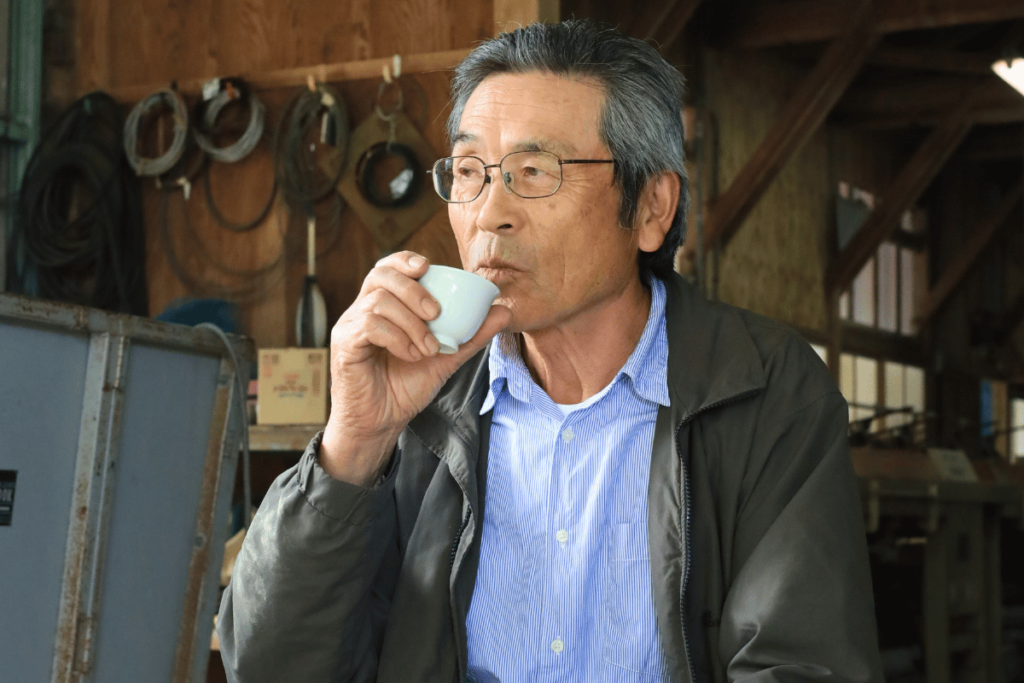
Mori San looked exactly the same. The same warmth, humour, and careful attention to detail throughout processing, and the same regard for his ornamental garden, which he enjoys showing us. This is a man who loves being outdoors in relationship with, and tending to, nature.
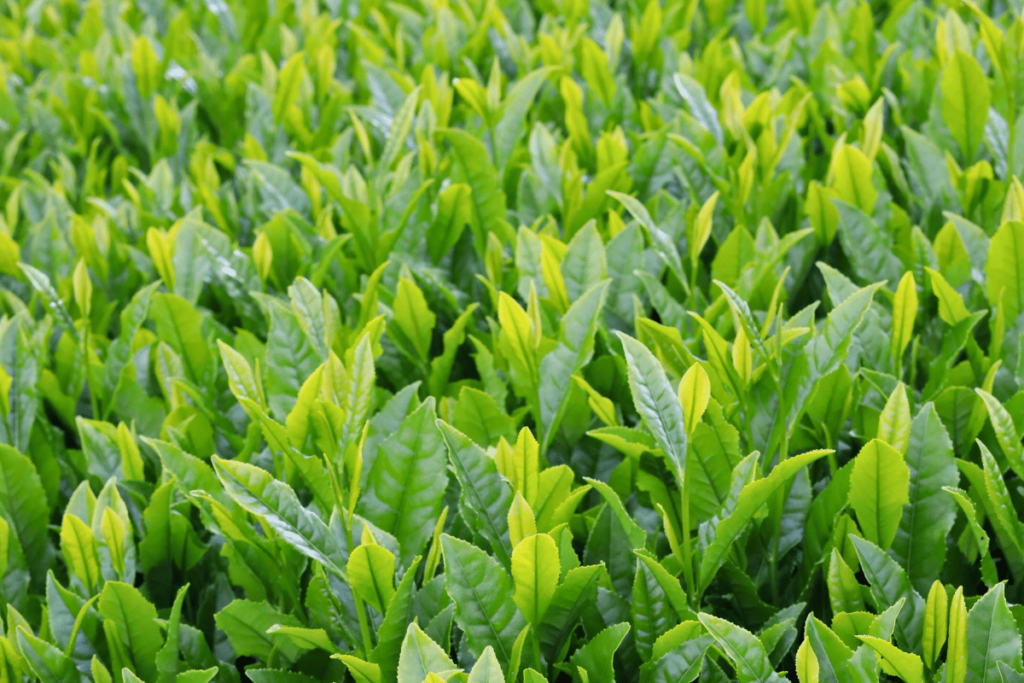
This year, we spent more time observing the very beginning of production. Freshly harvested leaves are first placed beneath a large fan where air moves gently through them before steaming. The freshness and colour of the leaf at this stage is remarkable. Bright, vivid green with a softness and vibrancy that immediately reflects the quality of the raw material.

What also became clearer on this visit was the reality of the scale behind these teas. Mori San and his wife manage production together, producing between 800 and 1,000 kilograms annually before turning their attention to rice cultivation for the rest of the year.
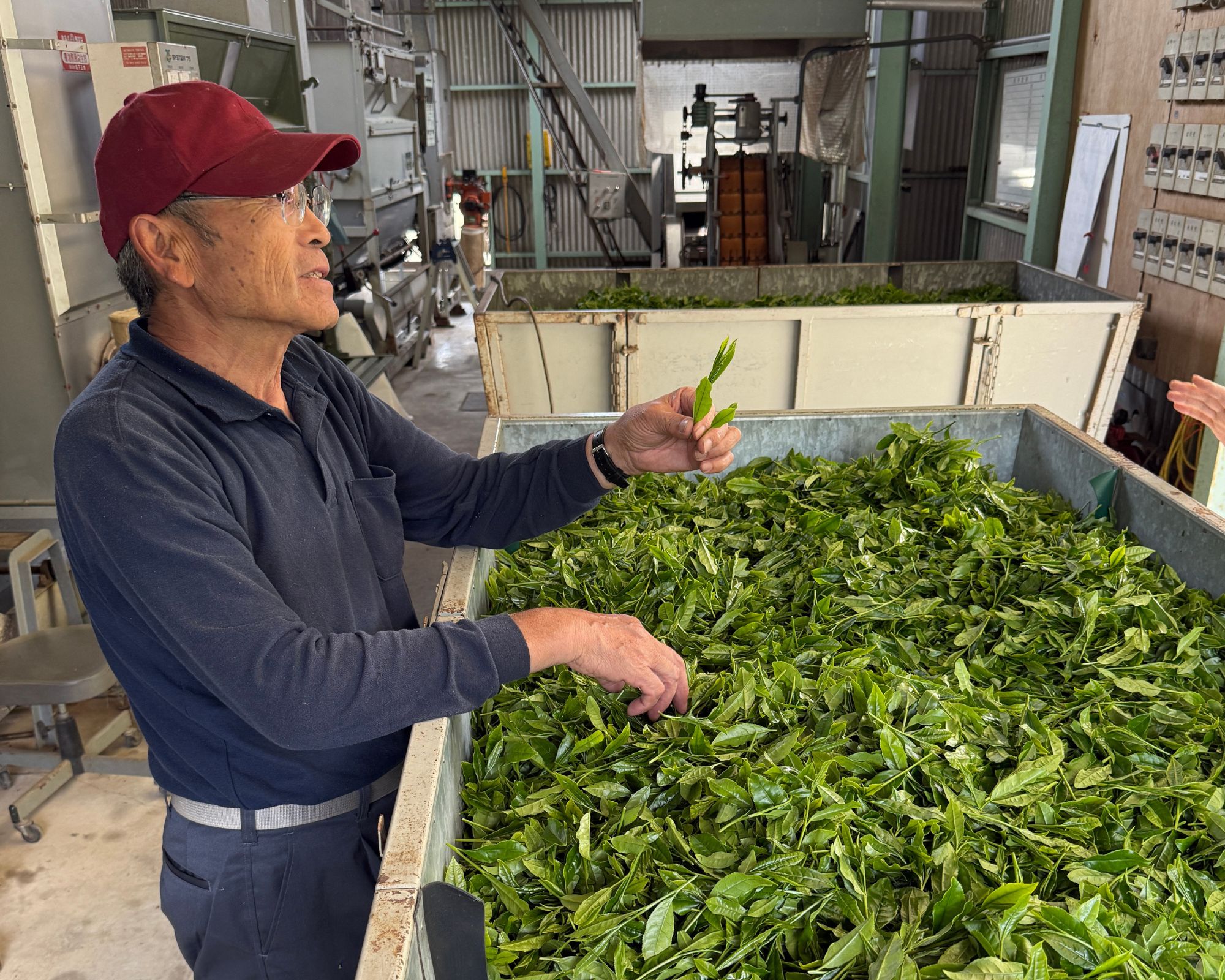
Despite increasing global demand for Japanese tea, the work here remains small-scale and highly manual, working in the same workshop with the same machinery as his father and grandfather, fixing things himself as he goes along. The processing is careful and consistent, shaped by decades of experience and repetition rather than modern scale.
Mori San likes to work with different cultivars, approaching them innovatively and reacting each year to what he instinctively feels will work. Previously, we have bought his:
Honyama Sencha Koshun -with notes of umami, wildflowers, and green vegetables
Honyama Sencha Okukimidori - with notes of melon, tomato vine, and umami
Honyama Sencha Yabukita - with notes of sweet peas, bamboo, and creamy umami
Though this year he tells us he is trialling something new since he likes to remain agile and reactive, experimenting as he goes along.
The character of the teas remains exactly what first drew us to Honyama: clarity, gentle sweetness, plenty of umami and that incredible sense of vitality in the cup. In a world increasingly shaped by speed and scale, there is something incredibly special about teas that still reflect the pace, instinct, and personality of the people behind them.
Explore the Platinum Collection >
-(1).jpg?w=2000&h=1600)
 All Rights Reserved. © AVANTCHA 2026