
Long before green tea appeared on wellness menus or in morning routines across the world, it was being sipped in the courts of Chinese emperors, carried along ancient trade routes, and woven into the rituals of Japanese culture. Tradition holds that it was Emperor Shennong, the mythical Divine Farmer, who first encountered tea around 2737 BCE, when leaves from a wild Camellia sinensis tree fluttered into his bowl of boiling water. Whether legend or fact, China's relationship with green tea is one of the oldest in culinary history, and by the Tang Dynasty it had become central enough to national life to warrant Lu Yu's Cha Jing, the world's first treatise devoted entirely to tea.
Today green tea sits alongside water and black tea as one of the most widely consumed beverages in the world, and it remains widely misunderstood: mistaken for something pale, bitter, or purely functional. It is, in fact, one of the most varied categories in the tea world, capable of flavours that range from grassy and vegetal to buttery, umami-rich, roasted, or floral.
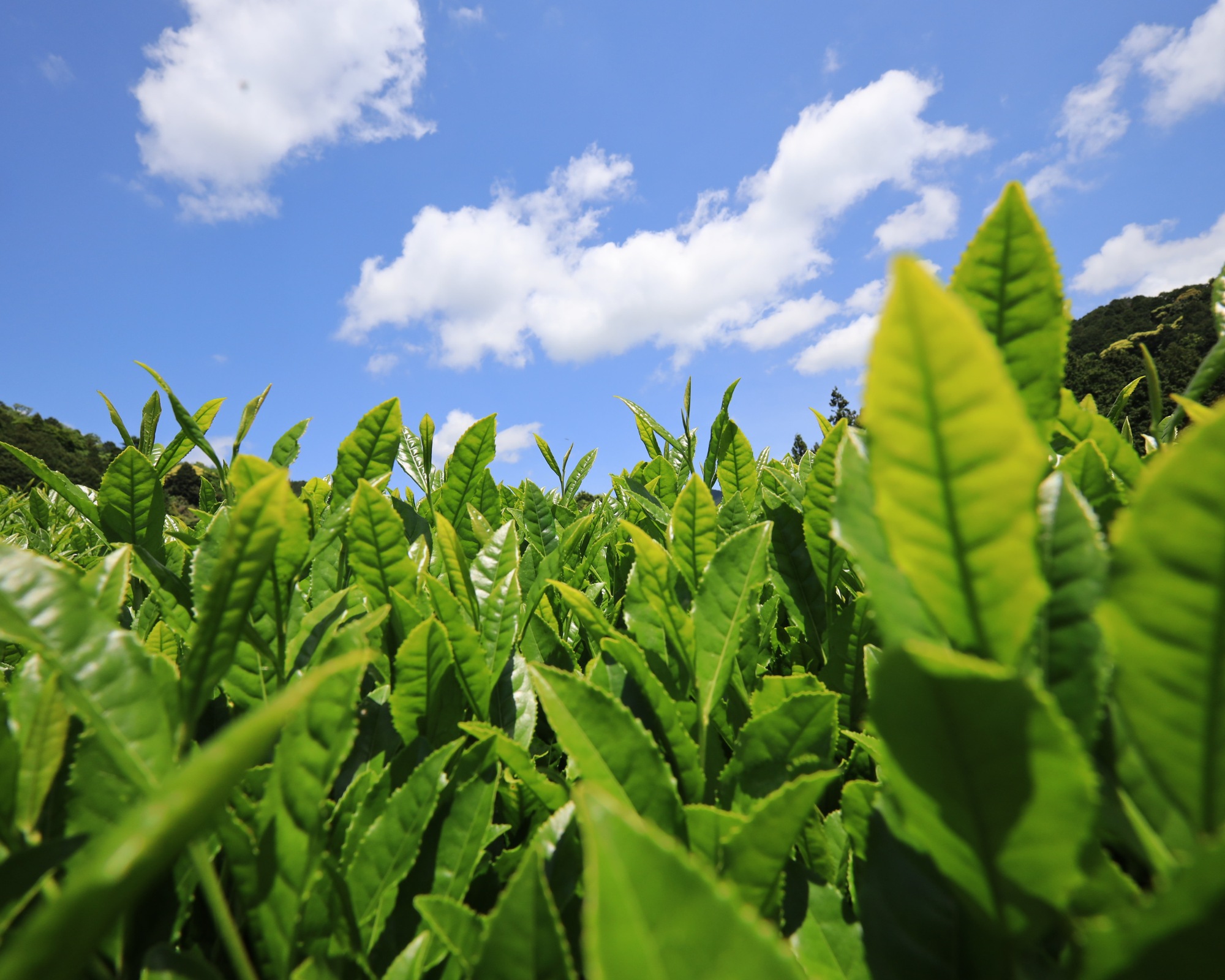
What Is Green Tea Made From?
Green tea is a true tea, derived from the leaves of Camellia sinensis, the same plant that produces black, white, and oolong tea. What makes it green is not a different plant. It is a different approach to processing.
The freshly harvested leaves are treated immediately after picking to halt natural oxidation. The result is a tea that retains its green colour, its fresh character, and a polyphenol profile that sets it apart from more heavily processed teas.
How Green Tea Is Made
When a freshly harvested leaf is exposed to oxygen, enzymes within it begin to break down. This sets off a cascade of reactions that darken the leaf, transform its flavour compounds, and fundamentally change what ends up in the cup. In black tea, this process runs to completion. In green tea, it is stopped almost immediately, and the method of stopping it is where Chinese and Japanese traditions diverge, each producing an entirely different character.
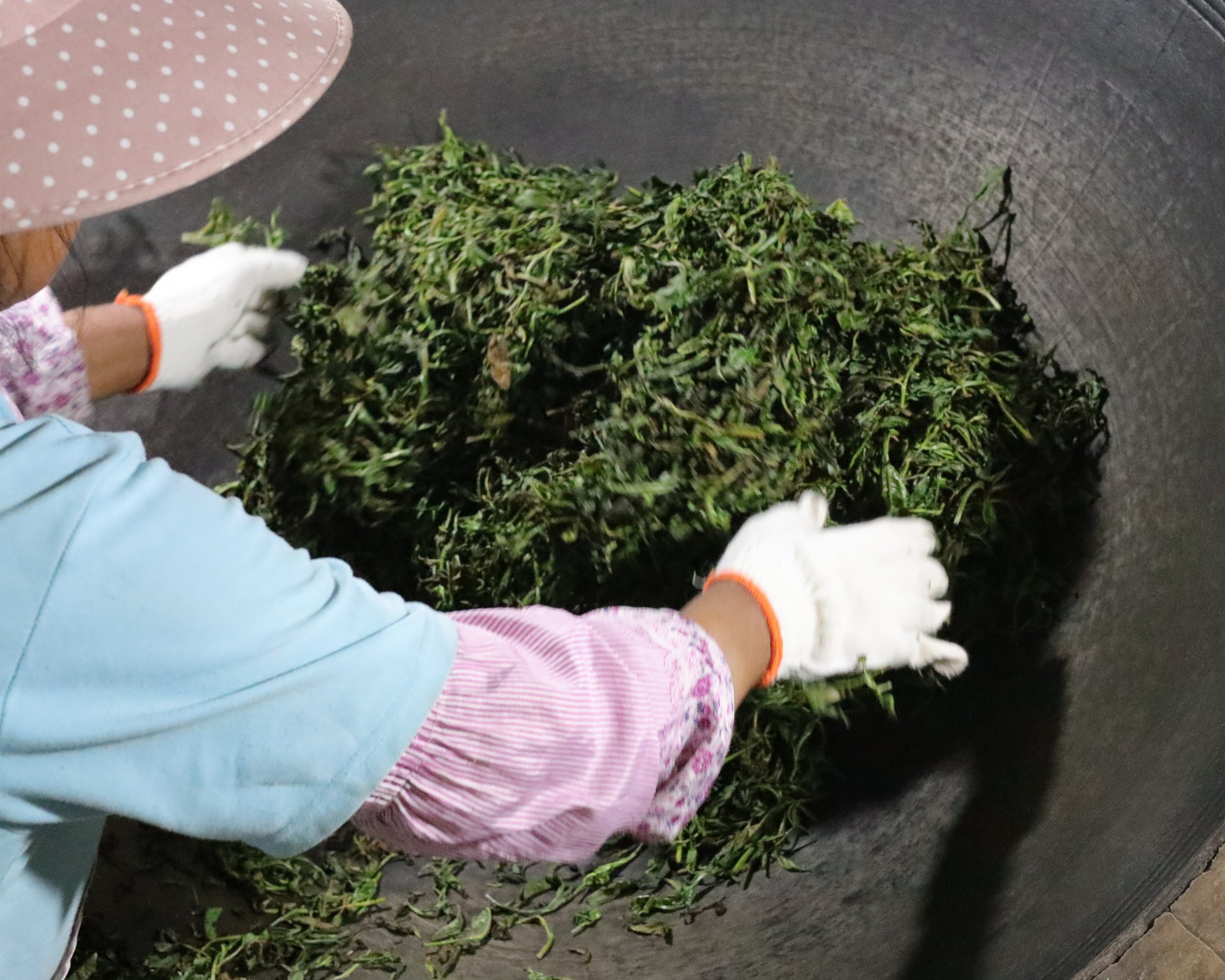
In China, oxidation is halted by pan-firing: freshly harvested leaves tossed in a hot wok or rotating drum at high temperatures, deactivating the relevant enzymes within minutes. Pan-firing imparts a roasted, nutty, occasionally smoky quality, and produces the toasty profiles associated with teas like Longjing and Gunpowder.
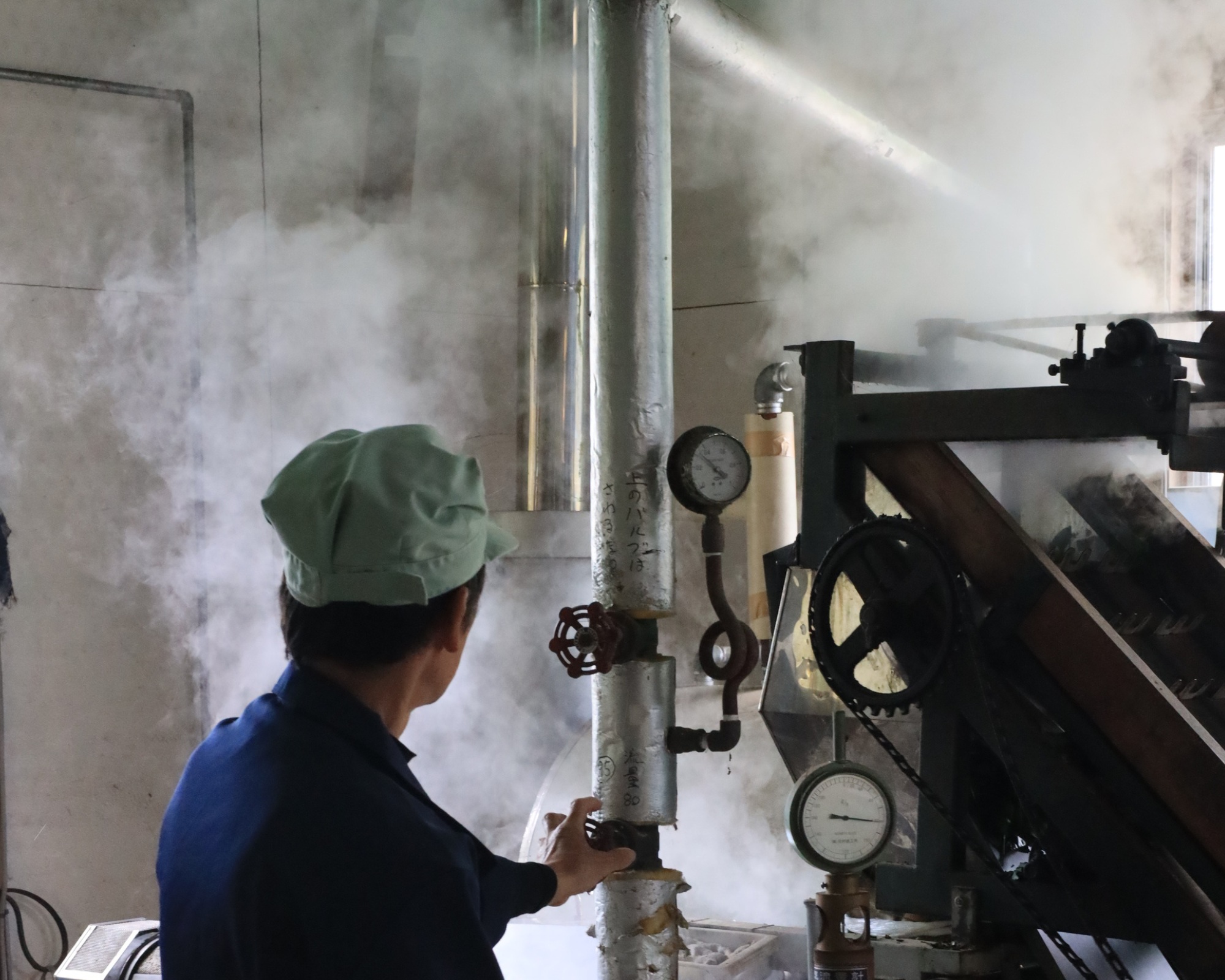
In Japan, where tea is believed to have arrived via Buddhist monks travelling to and from China as early as the ninth century, the leaves are exposed instead to a brief burst of steam. This halts oxidation rapidly and at a lower temperature than pan-firing, preserving more of the leaf's natural chlorophyll and producing the vivid colour and vegetal, oceanic character that defines Sencha, Gyokuro, and Matcha.
After either method, the leaves are rolled, pressed, or ground into powder, and dried. What reaches the cup carries the complexity of its terroir, its harvest, and the skill of the person who made it.
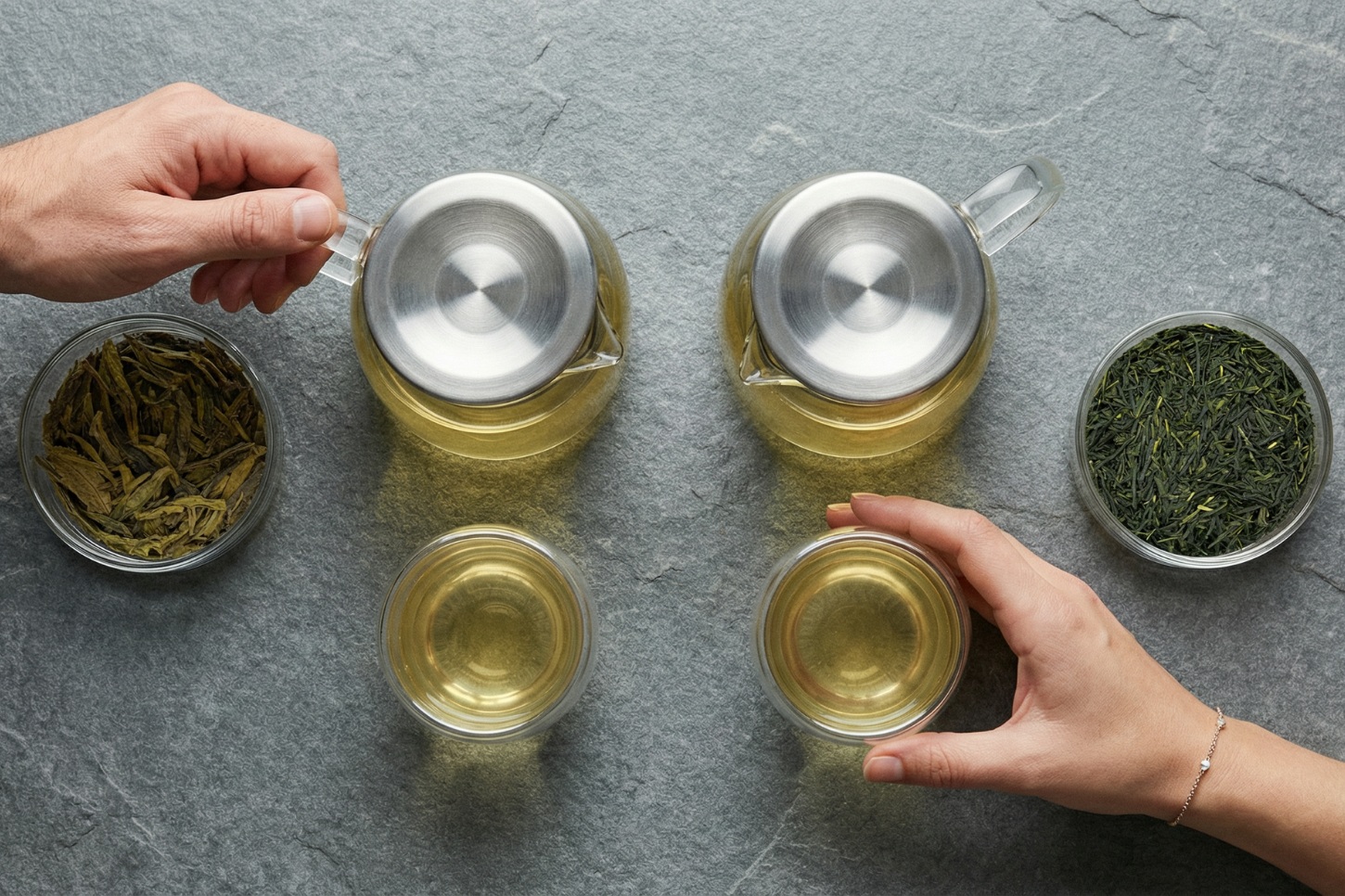
Green Tea vs Black Tea
Green tea and black tea come from the same plant, grow in many of the same regions, and are harvested by the same hands. The difference lies entirely in what happens after harvest: black tea is fully oxidised, green tea is not, or only minimally so.
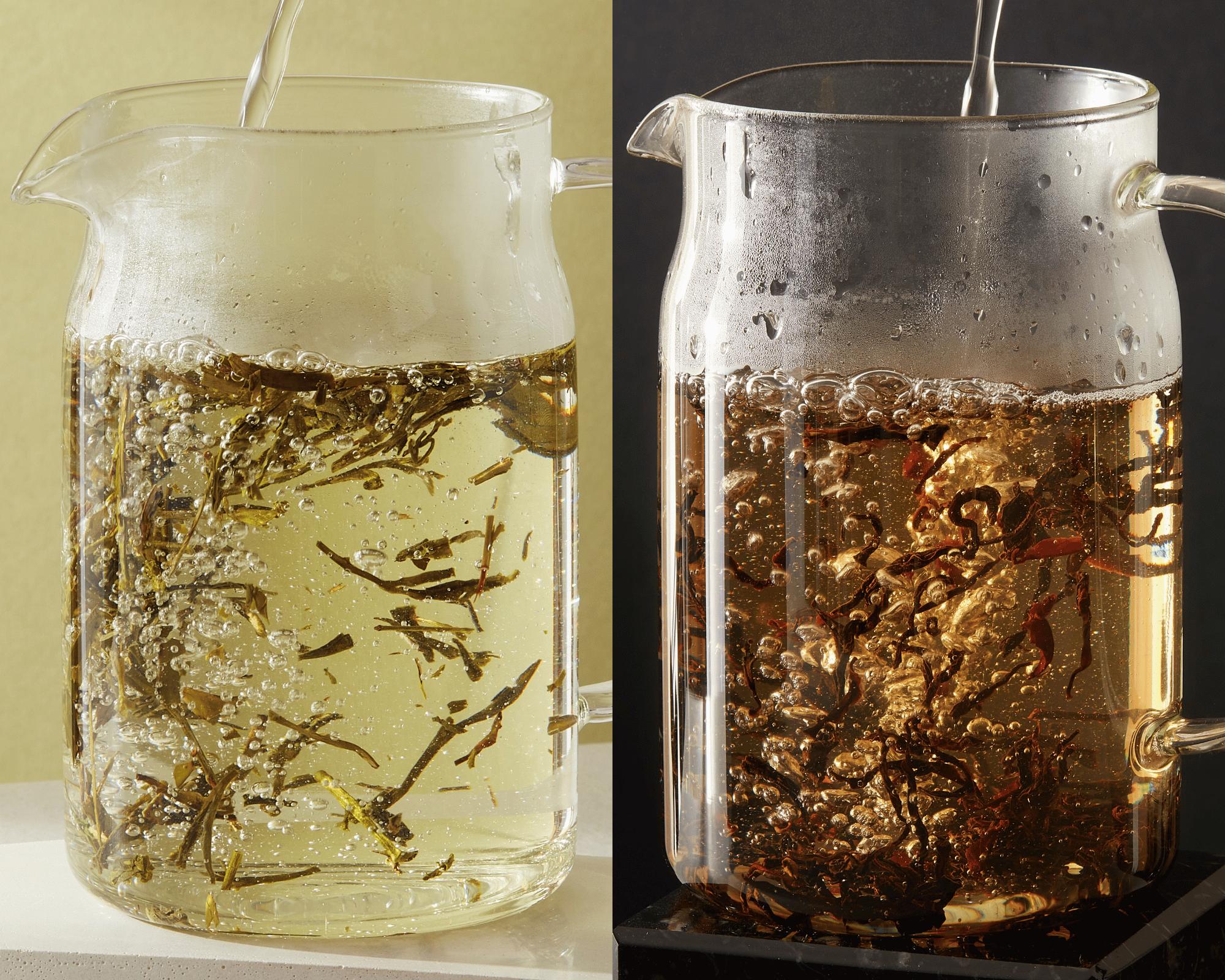
That single distinction produces two different chemical profiles and two different traditions in the cup. Black tea tends toward depth: malty, bold, warming, with natural astringency. Green tea tends toward delicacy: fresh, grassy, vegetal, or nutty depending on origin and processing. If you want body and warmth, reach for black tea. If you want freshness and precision, reach for green. Read our full guide to black tea to explore that side of the spectrum in depth.
What Does Green Tea Taste Like?
This depends almost entirely on where the tea comes from and how it was made, which is part of what makes the category so rewarding to explore. At its core, green tea carries a quality that is almost vegetal or herbaceous, a reminder that what you are tasting is a minimally processed leaf, still carrying something of the garden it came from.
A Japanese Sencha is clean and bright, with a pleasant astringency and a gentle umami depth. A Gyokuro, grown in shade, intensifies that umami into something rich and oceanic. A Chinese Longjing is smooth, nutty, and subtly sweet, with a toasted quality from its pan-fired production. A Gunpowder green tea is bold and slightly smoky, its flavour unfurling as the tightly rolled pellets open in the water. Hojicha, roasted from green tea stems and leaves, departs from the green tea profile almost entirely, offering warmth, nuttiness, and caramel notes that read closer to coffee than to tea itself.
If you have ever found green tea bitter, that is almost always a brewing issue rather than a quality of the leaf. Lower water temperatures and shorter steeping times are the two variables that matter most. Our guide to brewing great-tasting green tea covers this in detail.
Types of Green Tea
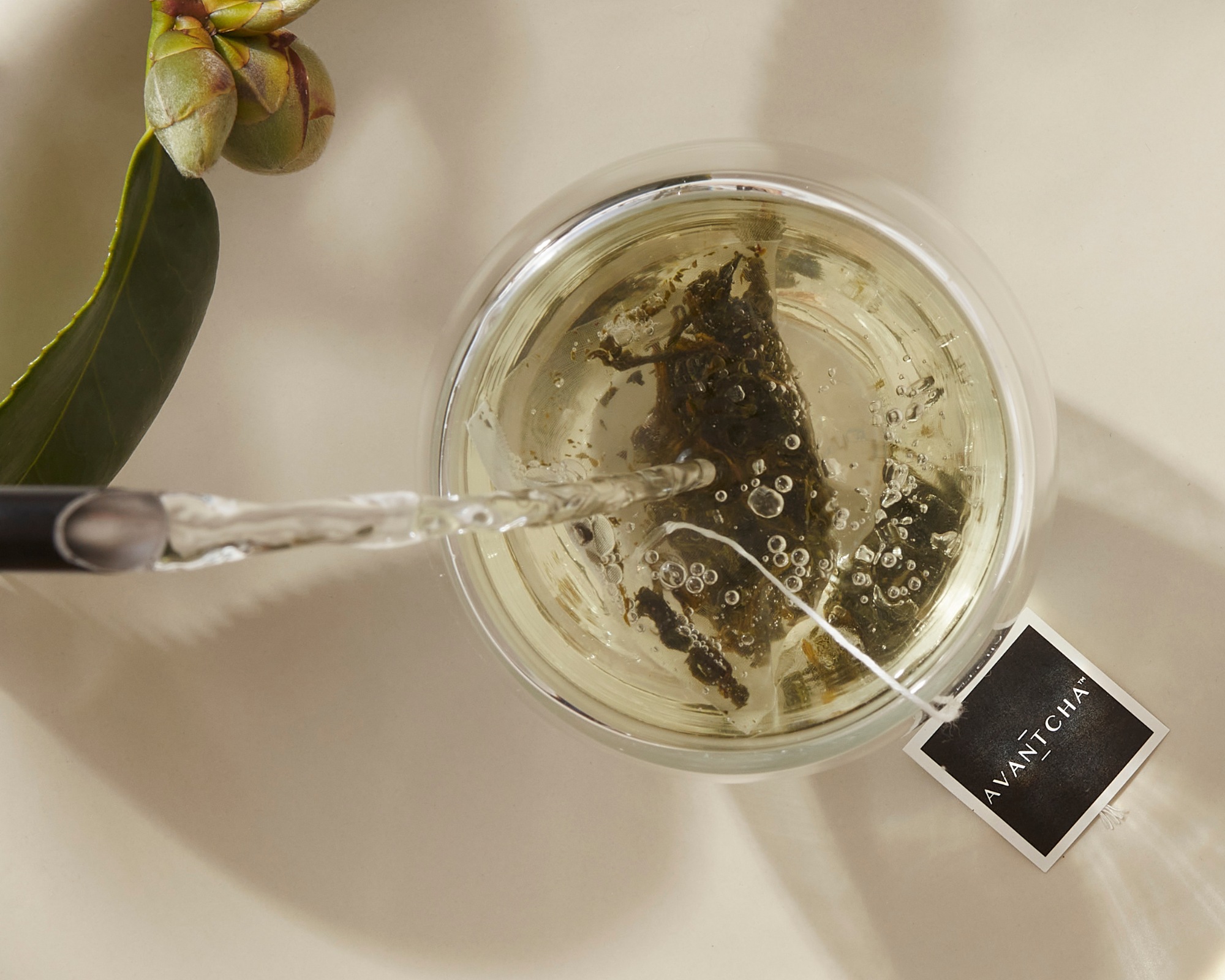
For an everyday cup, start with Sencha. It is the most widely consumed tea in Japan, accounting for roughly 80% of the country's production, and the name itself translates loosely as "infused tea," a reference to steeping whole leaves rather than the powdered preparation of Matcha. Our Organic Japanese Sencha Kagoshima blends three cultivars, Yutakamidori, Asatsuyu, and Saemidori, grown in volcanic soil under Kagoshima's mild, subtropical climate. The leaves are medium-steamed, producing a full-bodied, aromatic cup that opens mild and sweet before deepening into bolder complexity across subsequent infusions.
For umami depth, choose Gyokuro. The name means "jade dew," and it is produced by shading the plants for three to four weeks before harvest, which increases chlorophyll and L-theanine in the leaf. The result is deep green, intensely umami, and complex in a way no other green tea matches.
For the full-spectrum leaf experience, there is Matcha: shade-grown Tencha, steamed, deveined, and stone-milled into an ultra-fine powder. Matcha and Hojicha (powder) both deserve closer attention, covered in full below.
For something bold and historic, Gunpowder green tea takes its name from its tightly rolled pellets, said by nineteenth-century British traders to resemble black powder. The rolling itself dates back much further than that resemblance: it was developed to protect the leaf on the long overland journeys of the Silk Road, as far back as the Tang Dynasty, when tightly rolled pellets held their freshness across months of travel in a way loose leaf could not. Each pellet is a whole leaf, and it unfurls slowly when placed in hot water. Our Moroccan Mint blends Gunpowder with Moroccan Nana mint, "nana" coming from the Arabic for mint, producing something peppery, cooling, and refreshing. In Morocco, mint tea is a gesture of hospitality rather than simply a beverage, served to guests across the Arab world.
For something warming and distinctive, there is Hojicha, developed in 1920s Kyoto as a practical use for tea stems left over after leaf production. More on its character and our own Hojicha below.
For something pan-fired and Chinese in character, there is Longjing, or Dragon Well, named for a legendary spring in Hangzhou's West Lake area said to harbour a dragon that stirred the water into life. Our Superior Qian Tang Long Jing is sourced from Mao Ping Village in Hubei, along the southern bank of the Yangtze, where warm summers and a pronounced monsoon season produce a smooth, nutty, moreish cup.
For an approachable, everyday alternative, there is Genmaicha, a green tea blended with roasted rice, sometimes called popcorn tea for the kernels that pop during roasting. The rice softens the tea's natural bitterness and adds a warm, toasty note. We offer a Matcha Iri Genmaicha which also adds a little matcha powder to the blend for lingering umami flavour.
Matcha and Hojicha: Japan's Tea Powders
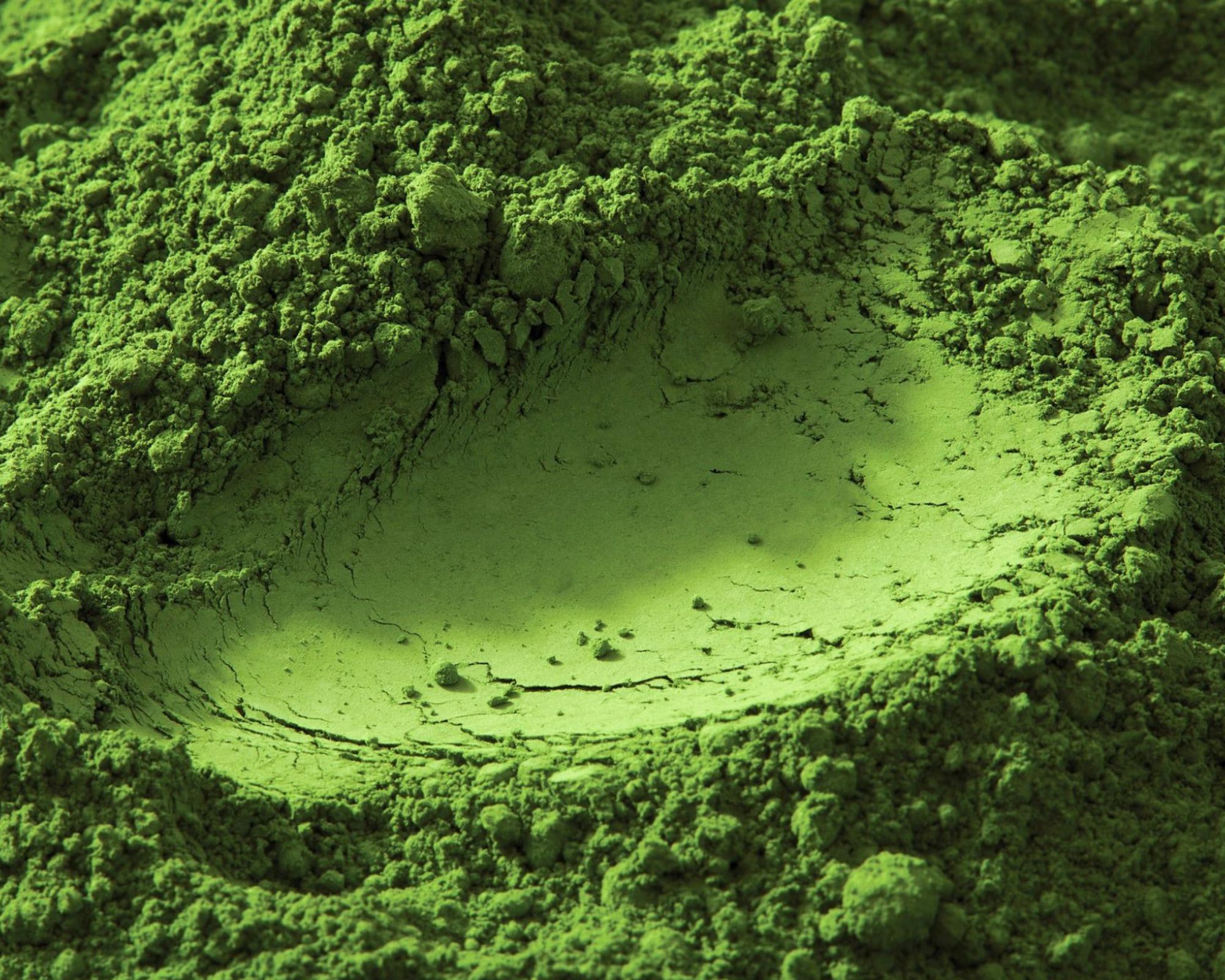
Matcha and Hojicha share a category of their own within green tea: both are stone-ground into powder rather than steeped and discarded as whole leaf.
Matcha begins as Tencha, shade-grown leaf that is steamed and ground into a vivid green powder. The result is thick, vegetal, and sweet, with a calm, sustained energy that comes from consuming the whole leaf rather than infusing it. Our ceremonial grade range moves across a deliberate spread of intensity: Matcha Ceremonial Grade Kagoshima Natural Farming sits at the approachable end, suited to a first cup. Organic Matcha Ceremonial Grade Fuji and the three Yame cultivars, Yabukita, Okumidori, and Seimei, each carry their own character within the same prefecture. At the far end is Matcha Ceremonial Grade Uji Samidori Hand Plucked, picked by hand on a sixth-generation family farm in Uji, the region most closely associated with Matcha's origins.
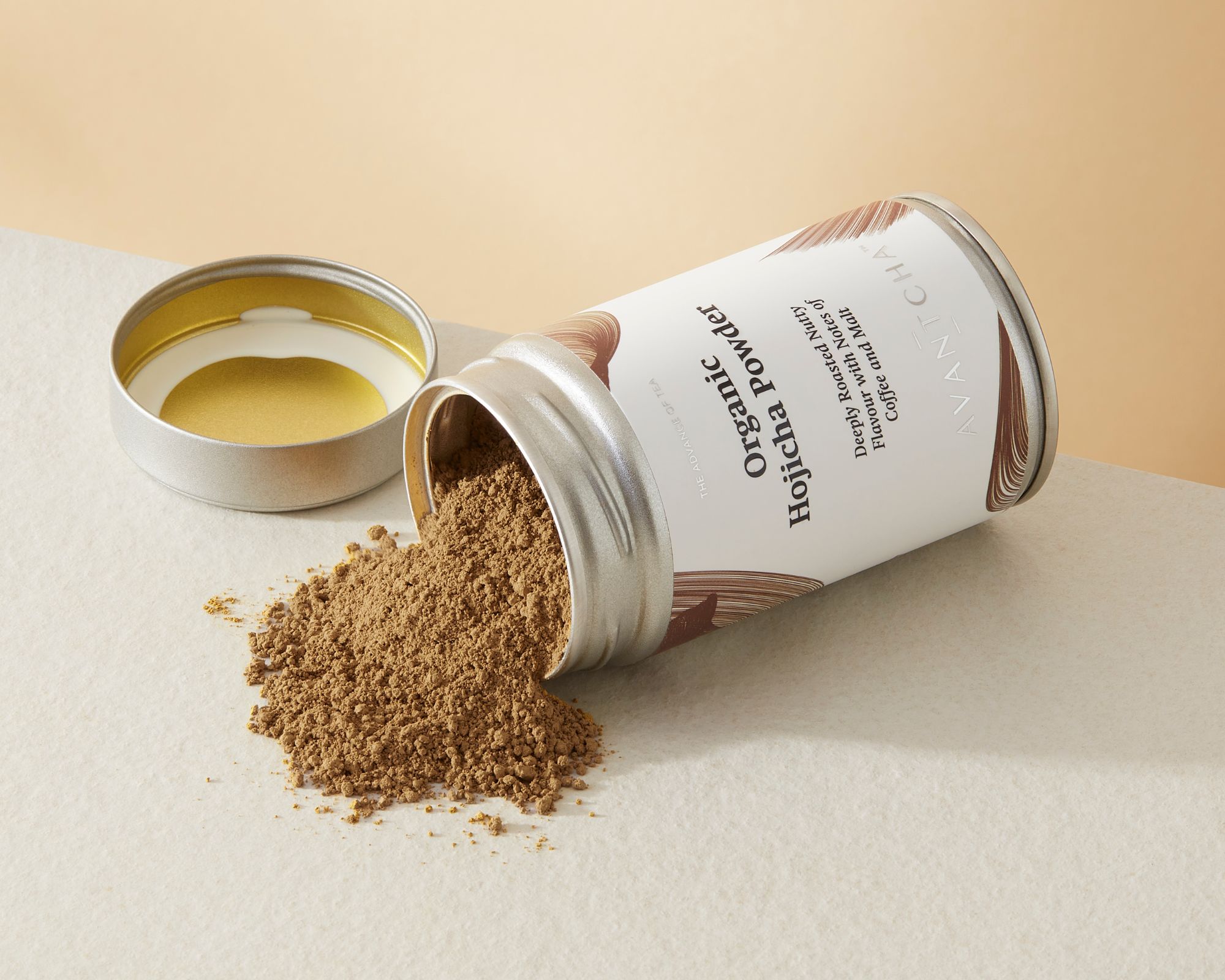
Hojicha takes a different path entirely. It is made from stems rather than leaves, traditionally roasted over charcoal rather than steamed or pan-fired, and that roasting changes the leaf's chemistry enough to set it apart from every other tea in this guide. Because it is made from stem rather than leaf, Hojicha does carry less caffeine than a typical infused green tea, though the roasting itself is responsible for its flavour, not its caffeine content. Where green tea preserves, Hojicha transforms: the result is warm, nutty, and reddish-brown rather than vegetal and green. Our Organic Hojicha Powder, roasted in Shizuoka, carries that same toasted character into powder form, suited equally to a latte, to baking, or to traditional preparation.
The two are not substitutes for each other. Matcha is vegetal and grounding. Hojicha is warm and toasted. Which one belongs in your cup depends on the moment, not on which is the better tea.
Flavoured and Scented Green Teas
Not every green tea is left to speak for itself. Alongside single-origin leaf, China and Japan have long traditions of scenting and blending green tea, and the results are some of the most distinctive teas in the category.
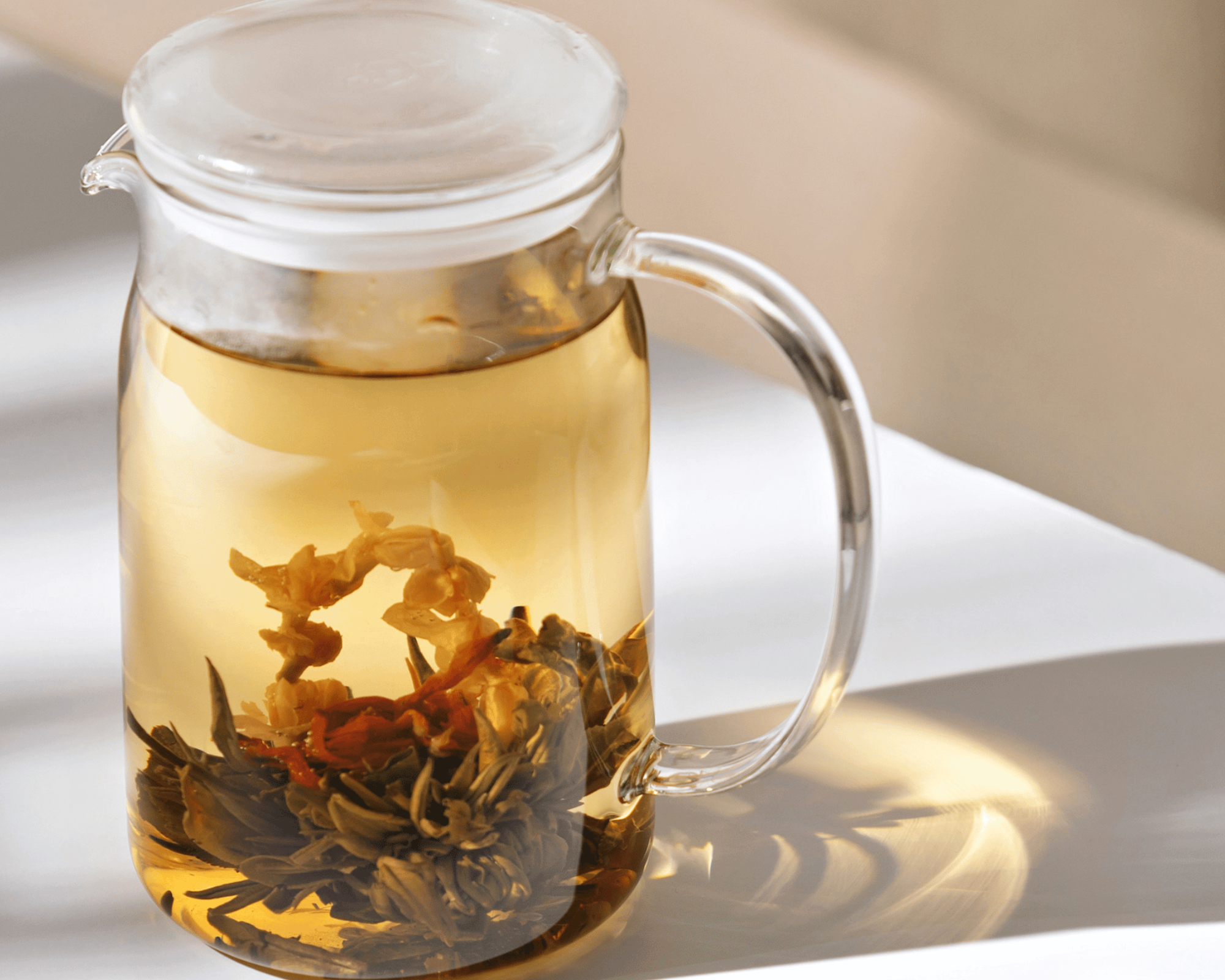
Jasmine Phoenix Pearls begins as young spring buds from Fujian Province, covered in fine white hairs, hand-picked and then hand-rolled into tight pearls. Before rolling, the buds are layered with fresh jasmine blossoms for up to five nights, taking on their scent slowly rather than through added flavouring. In hot water, the pearls unfurl into something soft and sensual, mildly sweet, carrying jasmine rather than announcing it. In China, serving jasmine tea to a guest is itself a gesture of hospitality, a tradition this tea carries forward in the cup.
Mango Bloom follows a similar artisan tradition from the same province: young Chinese green tea buds hand-tied into balls by Fujian artisans, wrapped with fresh marigold flowers before drying. Placed in hot water, the balls bloom open, releasing a soft, smooth infusion fragrant with summer flowers, finished here with a touch of natural mango for sweetness. It pairs naturally with afternoon tea fare such as cucumber sandwiches or citrus tarts.
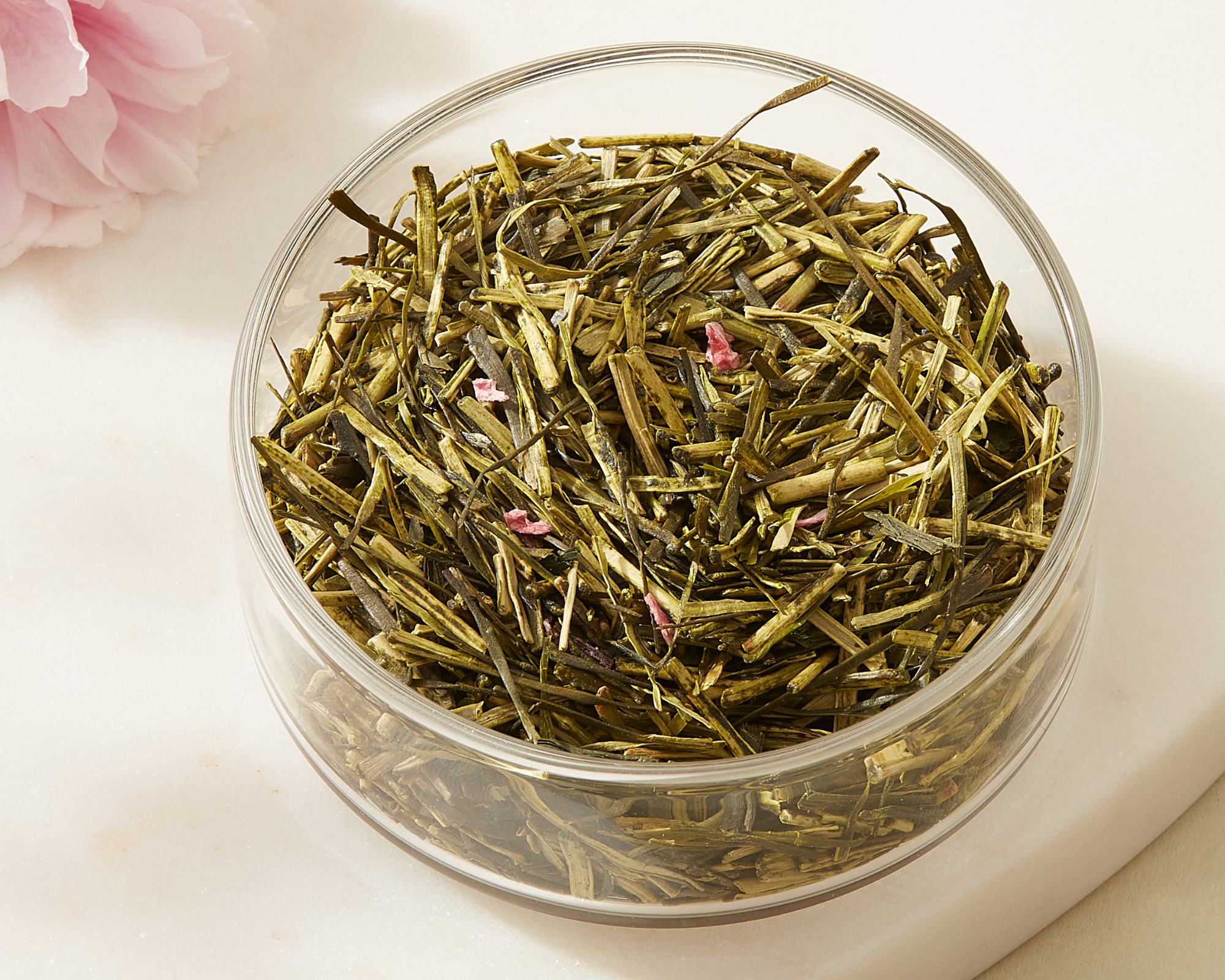
Sakura Iri Kukicha takes a different route again, built on Kukicha, a tea made from stems, here studded with pink sakura cherry blossoms gently harvested during Japan's cherry blossom season and lightly salted to preserve their colour. In Japanese culture, sakura carries weight beyond decoration, a symbol of beauty and transience tied to Hanami, the brief, celebrated weeks of blossom viewing each spring. The tea itself is floral and fresh, with a faint salinity and a rich, creamy umami note running underneath.
For something closer to home, Green Earl Grey takes the citrus brightness of natural Sicilian bergamot, traditionally paired with black tea, and sets it against green tea instead, finished with safflower and sunflower petals. The result is lighter and fruitier than a classic Earl Grey, with a citrus freshness that lingers rather than fades.
Cherry Sencha pairs fine Sencha leaves with dried sour cherry pieces, producing a vivid, rich green cup that is sweet rather than tart, suited equally to morning or afternoon. And Tropical Green takes a brighter, fruitier path again, green tea infused with pineapple, strawberry, and peach, gentle and refreshing rather than intense, carrying the feel of early spring sunshine.
Choosing a High-Quality Green Tea
The difference between an ordinary green tea and an exceptional one is not always visible to the naked eye, but it is unmistakable in the cup.
Origin matters as it does in wine. Altitude, soil, climate, and the surrounding ecosystem all shape the character of the leaf. The high-altitude gardens of Kagoshima, the volcanic hillsides of Fujian, the shade-grown estates of Uji each produce something that cannot be replicated elsewhere.
Harvest timing matters too. The finest green teas come from young buds and the first leaves of the season, the first flush, or Ichibancha in Japanese. These early harvests are more tender, more aromatic, and more concentrated in the compounds that make a tea worth drinking.
Processing integrity shows in the cup directly. A well-made green tea tastes clean, fresh, and precise. Staleness, excessive bitterness, or a flat, paper-like character point to poor processing or improper storage, which is why the best teas are nitrogen-packed or vacuum-sealed and consumed within their peak freshness window.
And sourcing transparency underwrites all of it. A brand that can tell you exactly where its tea comes from, who grew it, and how it was processed is one worth trusting. At AVANTCHA, every tea in our collection is selected with full knowledge of its provenance, and that relationship with the grower matters as much as the tea itself.
Caffeine in Green Tea
Green tea typically contains around 45mg of caffeine per cup, below most black teas at around 50mg, and well below brewed coffee, which can run from 95mg to 200mg depending on preparation. What makes green tea's caffeine distinctive is not the quantity but the experience of it. L-theanine, the amino acid naturally present in the leaf, moderates how the body absorbs caffeine, producing a steadier, more gradual lift rather than a spike.
The exact amount in any cup depends on the variety, the grade of leaf, water temperature, and steeping time. Gyokuro, grown in shade, tends to carry more caffeine than Sencha. Hojicha, made from stem rather than leaf, tends to carry somewhat less.
It's Time to Find Your Green Tea
The question is rarely whether green tea suits daily life. It is which green tea becomes part of yours. Explore the full AVANTCHA green tea collection and find the one that's meant to become your favourite.
Frequently Asked Questions
What is green tea made from?
Green tea is made from the leaves of Camellia sinensis, the same plant that produces all true teas. What makes it green is minimal processing: the freshly harvested leaves are heated by pan-firing in China or steaming in Japan to halt oxidation immediately after harvest, preserving their colour, freshness, and polyphenol content.
Why does green tea taste bitter?
Almost always because of how it was brewed, not the tea itself. Water that's too hot or a steep that runs too long pulls excessive tannins from the leaf. Lower the temperature and shorten the steep, and the bitterness usually disappears. See our guide to brewing great-tasting green tea for specifics.
What is the difference between green tea and Matcha?
Matcha is made from Tencha, shade-grown leaves that are steamed, deveined, and stone-milled into a fine powder, then whisked into the water and consumed whole. Most other green teas are infused: the leaf is steeped and removed. Because Matcha delivers the whole leaf, it carries a more concentrated character than any infused green tea.
What temperature should you brew green tea at?
Most green teas are best brewed at 70–80°C. Water that's too hot, closer to boiling, draws out excessive bitterness. Delicate teas like Gyokuro often reward an even lower temperature, while heartier teas like Genmaicha or Hojicha can tolerate slightly more heat.
Does green tea go stale?
Yes, more readily than black tea, since its lighter processing leaves it more exposed to air, light, and moisture. The best green teas are nitrogen-packed or vacuum-sealed to protect freshness, and are best consumed within their peak freshness window rather than stored indefinitely.
Can you drink green tea cold or iced?
Yes. Green tea works well cold-brewed, steeped slowly in cold water rather than poured hot over ice, which tends to mute its character. See our guides to making cold brew or iced tea at home for both methods.
Is green tea the same as Chinese tea or Japanese tea?
Not exactly. Green tea is a category, not a nationality, and China and Japan simply arrived at it by different routes: pan-firing in China, steaming in Japan. Each method produces a distinct style, roasted and nutty from pan-firing, vegetal and oceanic from steaming, rather than one being more authentically "green tea" than the other.
What is the best green tea for beginners?
Sencha is the natural starting point: clean, bright, and widely available, with a flavour that introduces the category without overwhelming it. From there, Gyokuro and Matcha are excellent for more deliberate exploration.

.png?w=2160&h=1440)
 All Rights Reserved. © AVANTCHA 2026